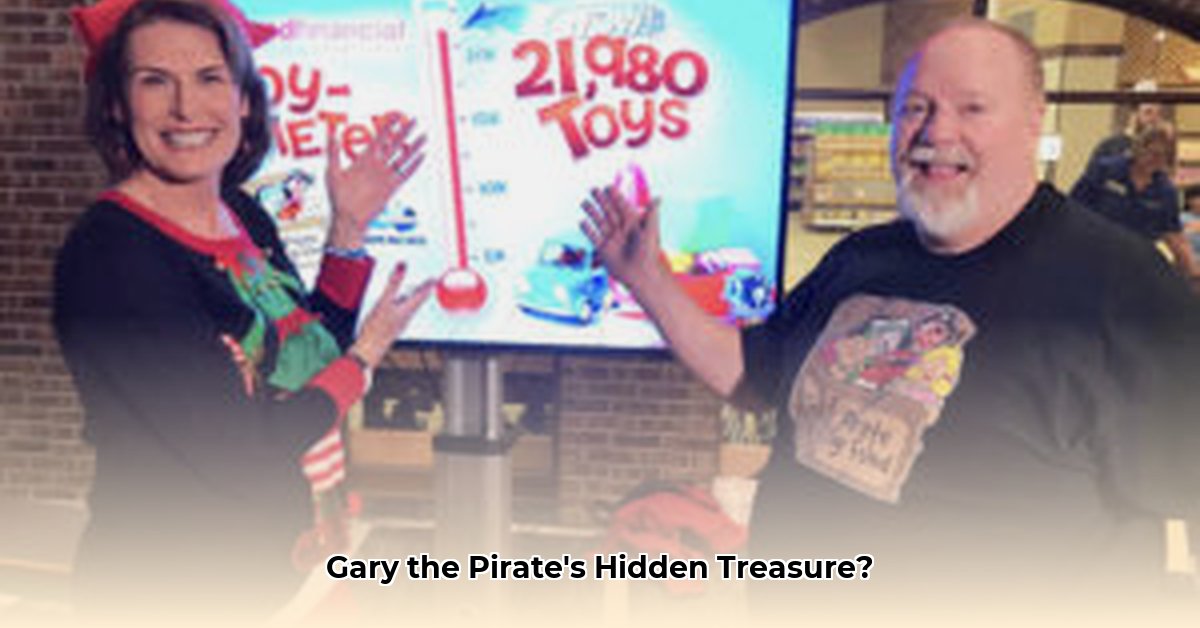
While the precise net worth of Gary Smith, known as "Gary the Happy Pirate," remains elusive due to conflicting reports about his current status, his true legacy is unequivocally the Pirate Toy Fund. This article explores the organization's remarkable history, the challenges of its transition, and the plan for its continued success, clarifying the ambiguity surrounding Gary's personal life while celebrating his immense contribution to children's well-being. This isn't just about numbers; it's about a treasure of compassion.
A Pirate's Legacy: The Pirate Toy Fund's Impact
Gary Smith's Pirate Toy Fund has, for 25 years, delivered immeasurable joy to hospitalized children. Over 250,000 toys have been donated, a testament to Smith's commitment and the power of his vision. The story began with a chance encounter with Christie Simonetti, a young girl battling leukemia. Her struggle inspired Smith to create a beacon of hope, bringing smiles and comfort to countless children facing similar challenges. This isn't merely a quantitative success; it's a narrative of profound human connection and enduring generosity. How many lives are touched by one man's kindness?
Charting a Course Through Transition: Succession Planning
The uncertainty surrounding Gary Smith's current status highlights the crucial need for succession planning. Whether he continues his work or has passed on, the Pirate Toy Fund stands at a pivotal juncture. The organization’s future hinges on securing strong leadership, maintaining robust funding, and ensuring its core mission of delivering joy to sick children continues uninterrupted. How will the organization uphold its legacy and maintain its emotional connection with children and families?
Navigating the Future: A Strategic Roadmap
The Pirate Toy Fund has developed a multi-pronged approach to ensure its continued success. This strategy focuses on several key stakeholder groups, each with specific short-term and long-term priorities:
Board of Directors: The immediate focus for the board is to secure a new executive director, create a seamless transition plan, stabilize finances, and diversify funding sources. Over the next three to five years, they aim to develop a comprehensive long-term strategy, cultivate key partnerships, increase organizational capacity, and establish a sustainable financial model.
New Executive Director: The incoming director's initial tasks include understanding the organization's inner workings, building strong relationships with stakeholders, and maintaining current programs. The long-term vision includes innovative program development, improved operational efficiency, enhanced fundraising strategies, and ensuring long-term organizational stability.
Donors and Volunteers: Maintaining transparency regarding the utilization of donations and emphasizing the positive impact of their generosity is crucial in the short term. Long-term goals include fostering lasting relationships, offering a wider range of engagement opportunities, and implementing feedback mechanisms for continuous improvement.
Hospitalized Children and Families: Maintaining a high standard of service and openly communicating any leadership changes while honoring Gary Smith's legacy are immediate priorities. Long-term goals include improving access to services, strengthened community engagement, and enhanced collaboration with hospital staff.
The Enduring Legacy: More Than a Net Worth
While the specifics of Gary the Happy Pirate's personal finances remain uncertain, his true wealth lies in the countless lives positively touched by the Pirate Toy Fund. His legacy is not defined by monetary value but by the profound impact of his altruistic vision. The fund's future, however, heavily depends on its ability to execute its strategic plan effectively. The success of this transition will truly determine the enduring value of Gary’s legacy. The narrative is far from over; it is merely embarking on a new and vital chapter.
Ensuring Nonprofit Sustainability: Lessons from the Pirate Toy Fund
The Pirate Toy Fund’s case demonstrates the critical importance of comprehensive succession planning for nonprofits. Its future success depends not only on securing adequate funding but also on cultivating strong leadership, building a resilient organizational structure, and adapting to evolving community needs. The strategies outlined below are crucial for the long-term viability of organizations like the Pirate Toy Fund:
Diversify Funding: Explore various revenue streams, including grants, corporate sponsorships, and earned income models.
Robust Financial Planning: Develop a comprehensive, multi-year budget, regularly review expenses, and identify areas for efficiency.
Strategic Reserves: Establish a substantial reserve fund to mitigate the effects of unexpected financial challenges.
Leadership Development: Invest in leadership training to prepare the next generation of leaders and ensure a smooth transition.
Empowered Teams: Foster a culture of empowerment that encourages team members to take ownership of their roles.
Active Board Participation: Ensure active board engagement in strategic planning and oversight.
Strategic Adaptability: Regularly review and update the organization's strategic plan to address changing community needs.
Community Connection: Maintain strong ties with the community to respond proactively to evolving needs and priorities.
Continuous Improvement: Adopt a culture of continuous evaluation and improvement, actively seeking opportunities for enhancement.
The Pirate Toy Fund's journey underscores the critical importance of strategic planning and proactive leadership in ensuring the long-term viability of nonprofits, demonstrating that a legacy of kindness extends far beyond the simple measurement of wealth.
Pirate Treasure
Content about Pirate treasure (Auto-generated fallback due to API error).